Give yourself a buffer between the scary film and bed so you're not trying to sleep straight after the final fright. Horror is great fun until the lights go off and your perfectly ordinary bedroom looks a bit less ordinary. I wouldn't rush that change of mood: leave yourself some quiet time before you expect to feel ready for sleep.
Sleeping after a scary movie in brief
A gentler end to the evening starts with something light after the film, followed by switching screens off an hour before bed. Talk it through with someone, and skip caffeine and alcohol late on. Then follow your usual bedtime routine so the evening finishes in a familiar way.
A scary film can leave you tense at bedtime
A tense film can leave you wound up and replaying scenes after it's finished. In a dark bedroom, with fewer distractions, those scenes can come back to you just as you're trying to settle. I've never found a sinister corridor quite so interesting in daylight.
There's little research on horror films and adult sleep, so treat this as common sense rather than science. Recognising that unsettled feeling is useful; assuming a frightening film guarantees nightmares isn't.
Make the end of your evening familiar after horror
Something ordinary to do after all that suspense is a sensible way to settle down.
1. Finish your viewing away from bed
Follow it with something light. A comedy episode or a silly video makes a gentler end to your viewing. Watch it before your wind-down hour, away from bed. The NHS advises against TV and phones right before bed because the blue light makes you more awake.1
2. A monster looks different beside a film crew
Watch the behind-the-scenes clips earlier in the evening. Seeing the make-up and crew takes the edge off for some people; I find there's something reassuringly ordinary about people getting a costume ready. Keep these clips before your screen-free hour too. Cast interviews can wait until tomorrow if it's getting late.
3. The daft bits deserve a laugh
Talk it through with whoever you watched it with. Laughing at the daft bits gives you something less sinister to remember, especially the character who decided to investigate that noise alone. There's no need to analyse every frightening scene. A little shared mockery is a perfectly good response to an implausible plot.
4. A nightcap is a poor sleep aid
Skip caffeine and alcohol late on. The NHS advises having no alcohol, tea or coffee for at least six hours before bed. Alcohol gets you to sleep faster but disrupts the second half of the night (Ebrahim, 2013).2 That makes a nightcap a poor choice when you're already worried about sleeping.
5. A bad night doesn't need a late start
Keep your usual routine. The NHS recommends relaxing for at least an hour before bed, perhaps with a bath or a book, and keeping your bedroom dark and quiet. Choose a familiar book if you've had enough suspense for one evening. Get up at your usual time even after a bad night, as the NHS advises.
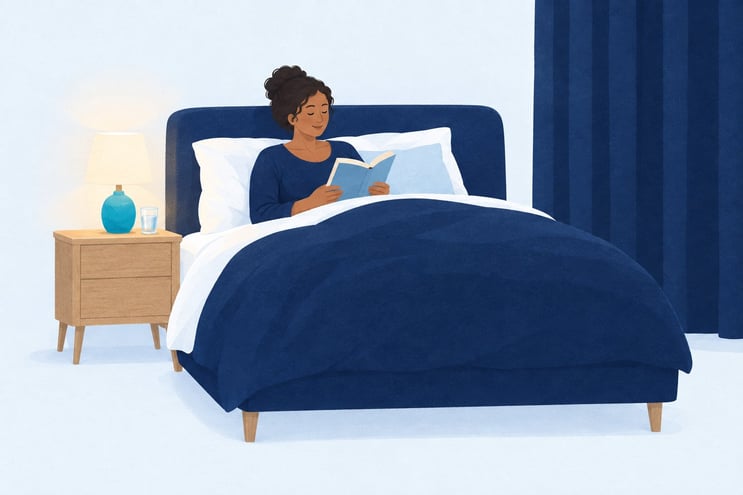 Relax for an hour before bed with a bath or a familiar book, and get up at your usual time.
Questions people ask about sleeping after scary movies
Do scary movies cause nightmares?
Some people find a tense film stays with them at night, while others sleep fine. Your own response is a useful guide to what you're comfortable watching. Notice whether particular films leave you unsettled when choosing your next one. You don't have to finish a film just because your friends love it, and enjoying horror doesn't oblige you to watch the most frightening thing available.
How long before bed should I stop watching a horror film?
Finish watching at least an hour before bed, then leave screens off, in line with NHS advice to relax for an hour first. Check the running time before pressing play. A late start leaves less room to unwind afterwards, especially with a long film. If an hour feels rushed for you, choose an earlier showing next time; there's no prize for watching horror at midnight.
What if I keep having nightmares?
Speak to a GP if poor sleep keeps happening and changing your habits doesn't help, as the NHS advises for insomnia. Explain how often the nightmares happen and how you feel during the day. A few notes can help you remember what you want to say at the appointment. Mention any connection you've noticed with films without assuming they're the whole explanation.

