The NHS says feeling tired in pregnancy is common and won't harm you or your baby, though it can make life feel harder. As your bump grows, finding a comfortable way to sleep gets harder too.
Sleeping in pregnancy in brief
Tiredness is common in pregnancy and won't harm you or your baby. From 28 weeks, go to sleep on your side, left or right. Turn back onto your side if you wake on your back. Pillows can support your bump. Have no more than 200mg of caffeine a day and none in the evening. Call your midwife or maternity unit immediately if your baby is moving less than usual.
Tiredness is common early and late in pregnancy
The NHS says it's common to feel tired or exhausted, especially in the first 12 weeks, when hormonal changes can leave you tired, nauseous and emotional. Rest as much as possible and sit with your feet up during the day. Accept offers of help, too. You don't need to do everything yourself.
Later in pregnancy, the extra weight can leave you tired, and a growing bump can make lying down uncomfortable. You may also need the loo a lot. Strange dreams about the baby or the birth are normal. If they're troubling you, talk about them with your partner or midwife; sharing them can help.
Go to sleep on your side from 28 weeks
The NHS says either your left or right side is the safest position to go to sleep. After 28 weeks, research suggests falling asleep on your back can double the risk of stillbirth.1 This may be to do with blood and oxygen flow to the baby. Don't worry if you wake on your back: turn over and go back to sleep on your side.
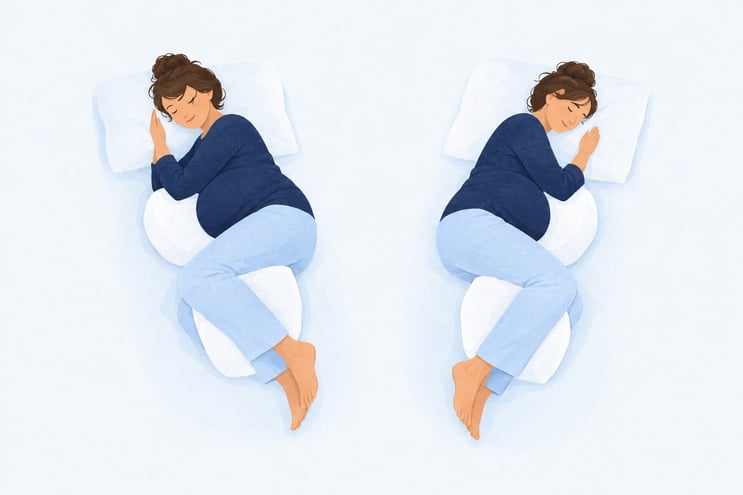 From 28 weeks, go to sleep on your side, left or right. A pillow under your bump and one between your knees can make it more comfortable.
Try pillows to support your bump and one between your knees to make side sleeping more comfortable. For the bed itself, see our guide to mattresses for pregnancy. Get to know your baby's usual pattern of movements, as the NHS advises on its Your baby's movements page.3 Don't use a home doppler to check your baby's heartbeat yourself.
Call your midwife or maternity unit immediately if:
- your baby is moving less than usual
- you cannot feel your baby moving anymore
- there is a change to your baby's usual pattern of movements
Do not wait until the next day, call immediately, even if it's the middle of the night.
Keep caffeine under 200mg a day and avoid it in the evening
The NHS Foods to avoid in pregnancy guidance says to have no more than 200mg of caffeine a day, because too much has been linked to a higher chance of miscarriage and stillbirth.2 Count all your sources: caffeine is in tea and coffee, cola, energy drinks and chocolate. The NHS estimates 100mg in a cup of instant coffee, 75mg in a cup of tea and 40mg in a can of cola.
Add up today's caffeine using the NHS estimates:
- Cup of instant coffee
- Cup of tea
- Can of cola
- 250ml can of energy drink
- 50g bar of plain dark chocolate (up to)
- 50g bar of plain milk chocolate (up to)
Filter coffee and coffee from a coffee shop can contain more than instant coffee, so count those cups higher.
For sleep, the NHS also suggests avoiding tea, coffee and cola in the evening, as caffeine can make it harder to go to sleep. Keep an eye on timing as well as your daily total. Staying within the limit doesn't make an evening coffee a good choice for sleep.
Relaxing, skipping late naps and staying active can help you sleep
The NHS recommends trying to relax before bedtime. Ask your midwife about relaxation techniques, as antenatal classes may teach some. It's best not to nap in the afternoon or evening. An antenatal yoga or pilates class can help, but tell the instructor you're pregnant. Exercise such as a walk at lunchtime or swimming can help you feel less tired. A lunchtime walk is a good, simple option if a class doesn't appeal.
If lack of sleep is bothering you, talk to your partner, a friend, your doctor or midwife. You don't have to keep it to yourself. Occasionally, sleeplessness with other symptoms, such as feeling hopeless or losing interest in things you used to enjoy, can be a sign of depression. Speak to your doctor or midwife, as there is treatment that can help.
Questions people ask about sleeping in pregnancy
Is it better to sleep on my left side?
Either side is fine: the NHS says the safest position to go to sleep is on your side, left or right. From 28 weeks, what matters is avoiding going to sleep on your back. Choose whichever side feels more comfortable rather than forcing yourself to lie on the left.
What if I wake up on my back?
Don't worry if you wake up on your back; turn over and go back to sleep on your side. The NHS advice is about the position you go to sleep in.
How much coffee can I drink while pregnant?
Have no more than 200mg of caffeine a day in total, including caffeine from drinks and food. That's about two cups of instant coffee, but filter coffee and coffee from a coffee shop can contain more. Tea, cola and chocolate count too, so don't treat those two coffees as a separate allowance.

