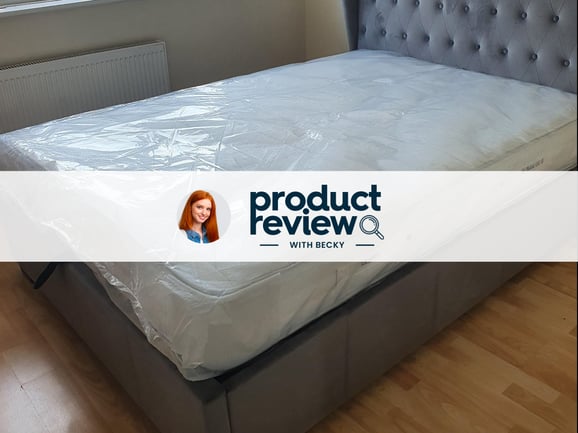
"Orthopaedic" is not a standard, a test or a promise: it's a word any mattress maker can print, usually to mean firm and often harder than you want. For the level support you're actually looking for, I'd start with a medium-firm to firm pocket-spring mattress chosen for your weight and sleeping position. You can leave the impressive label in the showroom; there's quite enough embroidery on the headboard.
The evidence supports medium-firm as a sensible starting point for many people with an ordinary bad back, with no case for choosing the hardest bed in the shop. A mattress does not treat back pain or a diagnosed condition. Honestly, "firmer must be better" is the most expensive misunderstanding in the mattress trade, and you don't need to fund it.
"Orthopaedic" tells you nothing dependable about support
Ignore "orthopaedic" when you're comparing mattresses, because no UK standard defines the word and no body tests mattresses for that designation. Makers use it for anything from medium-firm to extra-firm. I'd quite like a word that sounds this official to involve someone checking something, but there we are.
What you want is support that keeps your spine level in your usual sleeping position. Firmness describes how much resistance you feel when you lie down. Support depends on how your body settles across the mattress: your shoulder and hip need room without your middle sinking too far. A hard surface can press against you without giving you that balance.
If a physio has suggested an "orthopaedic" mattress, my reading is that they probably mean something around medium-firm with proper support. Ask them what feel and position they have in mind before buying. Translating a conversation about your back into the biggest word on a shop label is a surprisingly easy way to buy the wrong thing.
Compare mattresses using our firmness scale, where you can see their relative firmness in one place. Makers' own descriptions don't transfer reliably: one brand's medium can feel like another's firm. That makes me cross, because you've already got enough to choose without needing a separate dictionary for every shop.
Firmer support suits some bodies and presses too hard on others
A firmer mattress is most useful when you need more resistance beneath your body; lighter side sleepers usually need more cushioning. Start with your weight, then account for how you sleep. Buying the same firmness as your friend because you both have backs is a wonderfully popular shortcut with very little going for it.
These are the starting points I use when matching someone to a mattress. If your physio has given you specific advice, follow that when you try beds.
| Your sleeping situation | Where to start | What to check when you lie down |
|---|
| You're heavier and sleep on your back | Firmer pocket springs with a cushioned top | Your pelvis settles without dropping too far below your upper body. |
| You sleep on your front | Firmer support beneath your hips | Your hips stay level instead of sinking deeply. |
| You're lighter and sleep on your side | A softer comfort layer and less overall resistance | Your shoulder and hip sink enough for your waist to feel supported. |
| You have discomfort at your shoulder or hip | More cushioning at those contact points | You can lie in your usual position without concentrated pressure. |
| You're older or find turning and getting up difficult | Cushioning, easy movement and a supportive edge | You can turn comfortably and sit with your feet flat on the floor. |
| Your physio has asked for firmer support | The feel they've recommended | You can explain whether it feels comfortable in the position they've discussed. |
Back and supported side sleeping are where the posture evidence is most encouraging. In Saini and colleagues' 2025 systematic review, back sleeping was associated with a lower prevalence of low back pain and front sleeping with a higher prevalence. Side sleeping was the most common position; its relationship with pain depended on whether the spine was supported in line.1 The review covered six observational studies from 2005 to 2024 and examined posture rather than mattress firmness. My preference remains a medium-firm starting point for many readers, adjusted so you can settle comfortably in your actual position.
Front sleeping is the position I'd encourage you to move away from, although buying for the position you hope to adopt is a bit like buying jeans for a future version of yourself. Until your habits change, choose enough resistance beneath your hips for how you really sleep.
A sagging surface is a different problem from a cushioned one. In Verhaert and colleagues' 2011 study, deliberately sagging support worsened sleep quality mainly for side and front sleepers; back sleepers were less affected. Seventeen healthy young adults each spent three nights in one laboratory on an adjustable sleep system with personalised and sagging settings, with sleep measured by polysomnography.2 That supports avoiding sag, without establishing an ideal firmness for someone with back pain. Medium-firm is still where I would begin a comfort comparison; the aim is to avoid sinking out of line.
The hardest bed in the shop is a poor default for a bad back
Start your comparison around medium-firm instead of assuming extra-firm will be better for your back. The paving-slab approach sounds reassuring until you have to spend the night on it. You need enough give beneath your shoulder and hip as well as resistance beneath your middle.
In the short comparison within Ancuelle and colleagues' 2015 study, a small subgroup of older adults who were good sleepers was randomly assigned either a medium-firm or a high-firm mattress for two consecutive nights. Those assigned medium-firm fell asleep faster.3 Each person used one mattress; this was not a crossover. In the longer part, forty older adults in residential care used a medium-firm mattress for four weeks, after which neck, mid-back and lower-back pain scores fell, while their sleep-quality questionnaire scores did not change. There was no control group for the pain result, and the findings concern older adults in care. I take this as another reason to begin around medium-firm, rather than assume extra-firm will bring more relief.
When you're trying a bed, pay attention to where you feel pressure. My first suspicion when your shoulder and hip feel pressed and there's a gap beneath your waist is that the surface is too hard for you. If your pelvis sinks deeply and your lower back feels stiff by morning but eases after you get up, I would check for too much give or a dip. Use those observations to describe the feel when you speak to the retailer or your physio.
Don't congratulate yourself for tolerating an uncomfortable mattress just because it was sold as supportive. There's no prize for bedroom stoicism, and it's a bloody expensive hobby. You should be able to settle without feeling concentrated pressure or having to keep moving away from it.
Buy the spring support and comfort layer, then check the base
Choose pocket springs at a tension that suits your body, with enough comfort material above them to cushion you. A hybrid is my default for someone who wants support but doesn't know which construction to choose. The trade can spend ages naming the layers; I care whether you can lie on your side without wanting to get straight back up.
Use your body size to narrow the firmness first, then soften that choice for side sleeping where needed. In a showroom, spend a full ten minutes in the position you normally sleep in. Perching on the edge in your coat tells you very little about how your waist will be supported once you're lying down.
Reflex foam is the budget construction to consider when you want a firmer feel. Memory foam softens as it warms, so a surface that feels resistant at first can feel softer later in the night. Skip an "orthopaedic" memory foam mattress when maintaining a firm feel is your main requirement. If you sleep hot, I also prefer springs with breathable fillings over deep memory foam.
Check the base before you blame or replace the mattress. A dipped base undermines the support above it, and broken slats need dealing with. Keep slat gaps to about seven centimetres at most, subject to the mattress maker's requirements. Spending on a new mattress while leaving a damaged base underneath is the sort of purchase that makes me want to accompany you to the checkout.
For older or stiff sleepers, an adjustable base is one extra I think can justify its cost, particularly if raising the head or knees helps you get comfortable. Check the overall bed height and ease of getting in and out as well. For most other readers, I think adjustable bases are overpriced; a sound ordinary base is where the money should stop.
Give yourself the first fortnight to notice patterns, because the unfamiliar feel of a new mattress can distort your early judgement. Record where you feel pressure and whether you can turn easily. Check the return conditions before buying, including any minimum-use requirement and collection arrangements, so you know what to do if the feel remains wrong.
Leave these "orthopaedic" purchases in the shop
Rule out these choices before you pay, because each confuses a reassuring description with the support you actually need. I'm all for spending on a good bed; paying extra for a serious-sounding adjective is where I lose interest.
- An extra charge for "orthopaedic". The word has no defined standard behind it, so compare the construction and feel.
- Extra-firm bought solely because your back hurts. The evidence gives you no reason to default to the hardest option.
- "Orthopaedic" memory foam when a firm feel is essential. Memory foam softens as it warms during use.
- A firm surface for a light side sleeper with shoulder or hip discomfort. Choose enough cushioning for those contact points.
- A mattress bought as treatment for diagnosed pain. Follow your physio's advice about your condition and use the mattress choice to address comfort.
The label is free to ignore, which is a pleasingly affordable part of mattress shopping. Before ordering, compare the amount you'll actually pay with the construction and the return terms; a costly mistake is harder to undo when collection is awkward.
If your back pain persists or worsens, comes with numbness or weakness in your legs, or wakes you at night, speak to your GP.