Soft mattresses sit at the lower end of the firmness scale (roughly 3-4 on a 10-point range) and they suit a narrower population than most people expect. The instinct is to equate soft with comfortable, but they're not the same thing. A soft mattress that lets your pelvis sink too far is comfortable for the first hour and painful by morning. The buyers who do well on soft are lightweight side sleepers whose body weight doesn't compress the surface enough on medium to get proper pressure relief at the shoulder and hip.
I've tested soft mattresses alongside medium and medium-soft alternatives and the pattern is always the same: below about 9-10 stone and sleeping on your side, soft delivers the pressure relief that firmer constructions can't provide at lower body weights. Above 11 stone or sleeping on your back, the pelvis drops, the spine curves, and the morning stiffness starts. Soft has a narrow lane. It does that lane well.
Who soft mattresses actually suit
Lightweight side sleepers under about 10 stone. At lower body weights, medium and medium-firm mattresses don't compress the comfort layer enough for the shoulder and hip to sink in properly. The result is pressure at the contact points that worsens through the night. Soft construction lets the comfort layer do its job at lower activation thresholds, and for lightweight sleepers this is the firmness where side sleeping finally feels right.
Side sleepers with shoulder pain. If you wake up with a sore shoulder and your mattress is medium or firmer, the firmness might be the cause rather than the sleeping position. Stepping down to soft can reduce the pressure at the deltoid where the shoulder presses into the surface. Not a universal fix - I've seen cases where the shoulder pain was structural, not mattress-related - but worth trying before changing positions entirely.
Combination sleepers who alternate between side and foetal positions (side with the knees drawn up). Both positions load the shoulder and hip and benefit from the deeper contouring soft provides at the contact areas.
Who should NOT buy soft
Back sleepers at any body weight. Soft allows the pelvis to sink, flattening the lumbar curve. The heavier you are, the worse the drop. Even lightweight back sleepers are usually better on medium because back sleeping distributes weight more evenly and doesn't need the deep contouring that soft provides.
Stomach sleepers. Soft is the worst possible firmness for stomach sleeping because the pelvis drops forward and the lumbar arches. There's no body weight at which soft works for stomach sleeping. Medium-firm minimum.
Anyone over about 12 stone regardless of sleep position. At higher body weights the comfort layer compresses past the contouring sweet spot and into the structural instability zone. What felt soft-and-supportive at 9 stone feels like sinking-and-unsupported at 13 stone. The soft-medium page covers the firmness that heavier side sleepers usually need.
Buyers with lower back pain. The instinct is to go soft for comfort, but the evidence consistently shows that medium-firm delivers better back pain outcomes. Soft mattresses can feel soothing at the surface while creating the spinal misalignment that causes the pain to persist underneath.
Why soft does not mean comfortable
This is the most important point on this page and it's one the industry gets wrong constantly. Firmness describes how much the mattress resists your body weight. Comfort describes how the mattress feels at the contact surface. You can have a firm mattress with a plush comfort layer that feels luxurious. You can have a soft mattress with a thin cover that feels cheap.
Most buyers who walk into a showroom and say they want "a soft mattress" actually want a comfortable mattress, which is a different request entirely. A medium mattress with a thick, high-quality comfort layer will feel more comfortable to sleep on than a soft mattress with a thin one. If comfort is the goal, focus on the comfort layer quality and thickness over the firmness rating. Soft firmness is a specific construction choice for a specific body type and sleep position, not a synonym for nice-to-sleep-on.
Construction at soft firmness
Pocket springs at soft tension use lighter-gauge wire that deflects under less body weight. The springs provide less structural resistance than at medium or firm, which means the comfort layer handles more of the support role. That's why comfort layer quality matters more at soft than at any other firmness. A cheap thin comfort layer on soft springs produces a mattress that sags instead of cushioning, and the difference between the two is obvious within the first week.
Memory foam at soft tension creates the deepest contouring effect - the body sinks in, the foam wraps around the hip and shoulder, and the pressure relief is substantial. The trade-off is heat retention (more foam contact = more warmth) and difficulty changing position (the cradle resists movement). For lightweight buyers who don't overheat and don't shift position frequently, this works. For everyone else, responsive foam or latex at soft tension performs better because it cushions without trapping you in place.
Brands at soft firmness
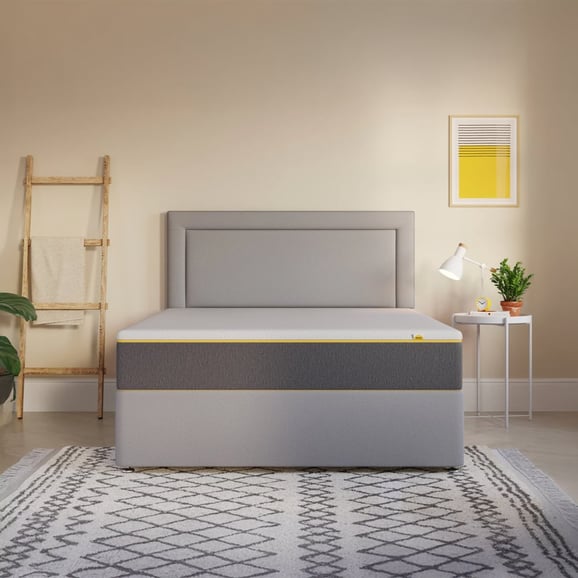
Emma NextGen Premium sits at the softer end of the D2C market and it's the first brand I'd point lightweight side sleepers toward. The foam comfort layer contours at lower body weights than firmer rivals manage. The 200 night trial gives enough time to confirm whether soft is actually the right firmness for your body or whether stepping up to medium would serve better after the break-in period.
Nectar Premier uses a memory foam comfort layer that creates the classic soft sink-in feel many buyers associate with mattress comfort. Softer than Simba or Otty by a noticeable margin. The 365 night trial is the longest in the UK, and for buyers who aren't certain whether they need soft or medium that year-long window removes the pressure of deciding quickly.
Hypnia Supreme Hybrid includes a latex layer that provides soft pressure relief without the slow-sinking memory foam feel. Latex at softer tensions is more responsive - you get the give at the shoulder without the cradle that traps you in position. For lightweight buyers who overheat on memory foam, Hypnia's latex approach handles temperature better while still delivering the contouring. 200 night trial, 15 year warranty.
Simba Hybrid Pro sits at medium overall but the zoned springs are softer at the shoulder, creating a soft-feeling contact area where side sleepers need it most while maintaining firmer support at the pelvis. For buyers who want soft benefits at the shoulder without the structural risks of soft everywhere, Simba's zoning is the considered middle path.
If your soft mattress is causing problems
If you bought soft and you're waking up with back pain, the mattress is almost certainly too soft for your body weight or sleep position. Before replacing it: a firm mattress topper (5-8 cm, latex or high-density foam) over a soft base can add the structural resistance the base lacks. Lower-cost fix that works when the underlying spring base is still sound.
Adjusting room temperature downward can firm up a memory foam soft mattress slightly, because cooler foam is denser and more resistant. Not a dramatic fix, but noticeable on hot summer nights where the foam has softened past your comfort point.
Verdict
Soft suits lightweight side sleepers under about 10 stone and very few other buyer profiles. If you're unsure, start at soft-medium or medium and step down if those feel too firm at the shoulder. Emma for the softest D2C option, Nectar for the longest trial, Hypnia for latex without the heat, Simba for zoned softness at the shoulder only. And remember: soft does not mean comfortable. The comfort layer quality matters more than the firmness label.