Kyphosis is an increased forward curve of the upper (thoracic) spine, and it creates mattress needs that are specifically different from lower back pain, sciatica, or general back discomfort. The curve puts the shoulder blades closer to the mattress surface than a neutral spine would, so the contact pressure at the upper back is sharper and more localised. If you've been sleeping on a mattress that works for everyone else in your household but leaves you stiff through the upper back by morning, the kyphosis is almost certainly why.
I've reviewed mattresses for buyers with kyphosis across a range of severity levels, from mild postural rounding through to Scheuermann's disease and osteoporosis-related vertebral changes. The construction that works is consistent across most cases, though severity changes which firmness level suits best.
This page is not medical advice. Kyphosis has multiple causes and varies in severity. If you have back pain, stiffness, or breathing difficulties related to kyphosis, consult your GP or physiotherapist. The NHS recommends physiotherapy for posture improvement and pain relief alongside any other changes you make (nhs.uk/conditions/kyphosis).
How kyphosis differs from other back conditions
Most mattress advice for back pain focuses on the lumbar spine, the lower back. Kyphosis is different because the problem is in the thoracic spine, the upper back between the shoulder blades. That distinction matters because the thoracic region contacts the mattress differently from the lumbar region, especially for back sleepers.
With a pronounced thoracic curve, the upper back creates a raised contact area that presses into the mattress more sharply than a neutral spine would. At the same time, the gap between the lower back and the mattress surface can be larger because the curve pulls the upper body forward. A mattress that's too firm pushes back against the thoracic contact area and creates pain at the shoulder blades. A mattress that's too soft lets the whole torso sink, exaggerating the curve. I've heard kyphosis buyers describe the wrong mattress as "feeling like sleeping on a golf ball between the shoulder blades" and that captures the problem well.
Sleep position for kyphosis
Back sleeping is the preferred position for most kyphosis sufferers because it distributes weight across the full length of the spine rather than loading one side. Side sleeping concentrates pressure at the shoulder and hip, and with kyphosis the upper-back contact point is already sensitive enough that adding lateral pressure usually makes things worse.
A small thin pillow or folded towel under the upper back can help bridge the gap between the thoracic curve and the mattress surface. This is a simple adjustment that makes a surprising difference for back sleepers with moderate kyphosis. I'd try it before buying a new mattress, because if the pillow alone improves things, your current mattress might be close enough to work with.
Your head pillow matters too. The forward curve of the upper spine pushes the head forward relative to the mattress. A standard medium pillow may not be thick enough to keep the neck aligned. Too thin and the neck drops backward. Too thick and it pushes the head further forward. A physio can help you find the right pillow height for your specific curve.
Stomach sleeping should be avoided with kyphosis. It forces the thoracic spine into extension, stressing the vertebrae and surrounding muscles in ways that cause morning pain and stiffness.
Construction that works for kyphosis
Pocket springs with a responsive comfort layer that gives more at the shoulder than at the mid-back. That's the ideal in simple terms. Worth saying that most mattresses are not specifically designed for thoracic conditions - kyphosis buyers are working within a general product category and selecting the features that happen to serve the condition, not buying a medical device. The springs provide the structural support that holds the spine, and the comfort layer manages the pressure at the contact areas.
Zoned support is more useful for kyphosis than for most conditions. A mattress with softer zones at the shoulder and firmer support through the thoracic and lumbar regions can accommodate the kyphotic curve without fighting it. Not every hybrid offers proper zoning - some brands market it when the actual firmness difference between zones is minimal. Simba and Origin both use zoned spring constructions where the difference is measurable rather than cosmetic.
Brands I'd recommend for kyphosis
Simba Hybrid Pro uses a zoned pocket spring system where the springs at the shoulder are softer than those at the mid-back and hips. For kyphosis, that zoning addresses the thoracic contact problem directly - softer where the curve creates a sharper pressure point, firmer where the lumbar spine needs consistent support. I've slept on the Simba with attention to upper-back feel and the shoulder zone is noticeable. 200 night trial.
Origin Hybrid Pro puts 5,700 springs in a king size with zoned construction across multiple firmness areas. The spring density gives more precise contouring around the thoracic contact area than lower-count builds manage. 15 year warranty, 200 night trial.
For buyers who prefer trying in a showroom, Hypnos Orthos Support provides consistent edge-to-edge pocket spring support with natural wool comfort layers. I've found the natural fibre surface recovers shape well overnight, so the support at the thoracic area doesn't degrade through the night the way some foam surfaces do. Premium pricing, but the build quality is consistent over years.
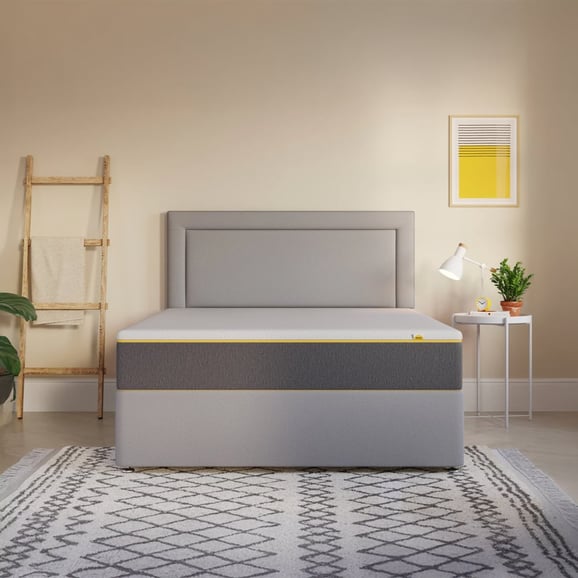
Lighter kyphosis sufferers under about 11 stone often need softer contouring at the shoulder than medium-firm hybrids provide. Emma NextGen Premium has a more giving foam comfort layer that accommodates the thoracic curve without pushing back as hard at the contact points.
Heavier back sleepers with kyphosis over about 15 stone need the structural support Otty Pure+ 4000 provides. 4,000 springs and a firmer build prevent the pelvis dropping, keeping the full spine in a better line. The firmness at the shoulder may be too much for lighter builds, but for heavier sleepers the structural integrity matters more than surface softness at that point.
Verdict
Back sleeping on a medium to medium-firm pocket spring hybrid with responsive shoulder contouring. Simba Hybrid Pro for the zoned spring construction, Origin for maximum spring density, Hypnos for heritage build quality, Emma for lighter builds, Otty for heavier builds. Try a thin pillow under the upper back before buying anything. And if your kyphosis is causing breathing difficulties, nerve symptoms, or worsening pain, your GP or physiotherapist is the right starting point.