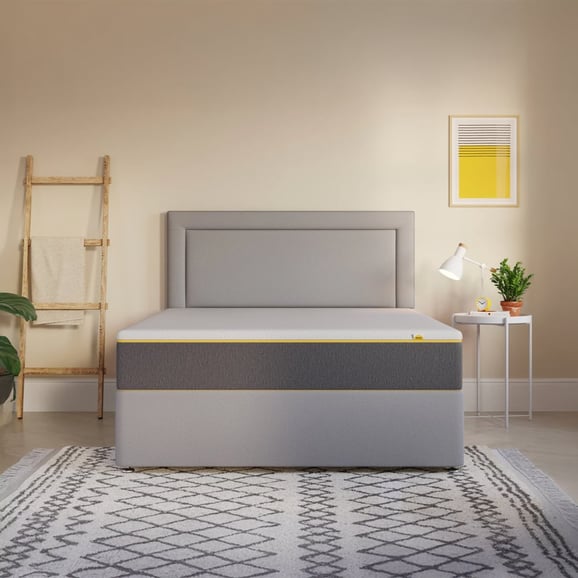
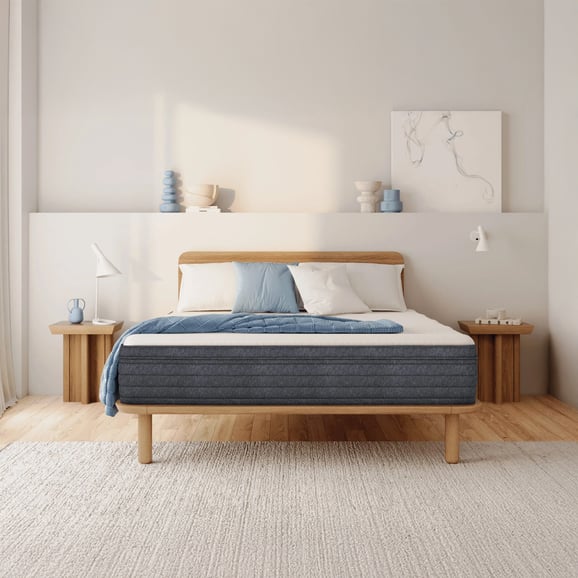
Sophie Conran is a British designer whose debut bedroom collection launched in partnership with Dreams in 2024, bringing her design credentials to a category that had been slowly drifting away from proper British design input. The collection is an 11-piece range covering four mattresses, bed frames, side tables and blanket boxes, with the mattresses designed specifically around temperature regulation and inspired by Sophie's own experience of disrupted sleep during menopause. That's a rare thing in the UK mattress market - a range built around a specific lived experience rather than generic comfort claims - and it's worth taking seriously even if menopause isn't your primary reason for shopping.
Two of the four Sophie Conran mattresses are manufactured at Dreams' own Bed Factory in Oldbury, West Midlands, which gives the range proper UK manufacturing credentials alongside the design-led identity. The collection sits firmly at the premium end of the Dreams ecosystem, with prices that start around £1,099 and climb towards £2,199 for the flagship Sanctuary model. That pricing puts Sophie Conran in competition with heritage British pocket spring brands like Hypnos, Relyon and Sleepeezee rather than the mid-market D2C foam hybrids.
The Four Sophie Conran Mattresses
Four mattresses make up the Sophie Conran range, each targeting a different combination of temperature regulation and comfort tier. Picking the right one matters more than with a tiered range because each model emphasises slightly different materials.
The Nest Pocket Wool is the most accessible entry into the range and uses locally sourced British wool designed to regulate temperature year-round, keeping you cooler in summer and warmer in winter. Pocket spring construction with natural fibre comfort layers. For buyers who want proper temperature regulation without paying the premium for the higher-tier models, the Nest is the starting point and one of the better-reviewed mattresses in the range.
The Aura Pocket Wool steps up with a combination of British wool, bamboo and latex in the comfort layers, paired with individually wrapped pocket springs and an additional micro-spring layer. The micro-springs absorb motion from a partner and cushion the joints more effectively than standard single-layer pocket springs. For couples who also care about temperature management, the Aura is where the collection starts delivering serious construction quality, and it's one of the two models that ranks well in UK search.
The Solace Pocket Wool sits between the Aura and the flagship, priced from £1,099 for a single and £1,599 for a super king. More substantial construction than the Nest and Aura, with deeper natural fibre comfort layers and a more premium finish. For buyers who want the Sophie Conran approach at proper heritage-tier quality without quite reaching Sanctuary pricing, the Solace is the sensible middle option.
The Sanctuary is the flagship and the most expensive in the collection, starting at £2,199 for a single. It combines bamboo, wool, latex and alpaca in the comfort layers, which is about as premium a natural fibre mix as you'll find in the UK mattress market outside of Vispring or Harrison Spinks. For buyers committing to the full Sophie Conran proposition, the Sanctuary is where the range competes directly with the heritage premium brands at the top of the category.
Why the Temperature Angle Matters
The Sophie Conran mattresses are marketed around temperature regulation, and this is one of the few cases where the marketing claim reflects real product design rather than being bolted on as a feature. British wool and bamboo are both naturally temperature-regulating materials, the latex layers breathe better than memory foam, and the alpaca on the Sanctuary adds moisture-wicking properties that pure synthetic fibres don't match. For hot sleepers, menopausal sleepers, or anyone who's struggled with memory foam's heat retention, the Sophie Conran range is built specifically around solving those problems.
The menopause angle is worth taking seriously. Night sweats and disrupted sleep affect a significant portion of women during perimenopause and menopause, and the mattress market has largely ignored this as a product category. Sophie Conran designing the collection around her own experience means the temperature regulation is prioritised in a way that's unusual for the industry, and it's one of the stronger selling points for the specific demographic the range targets.
The Bed Frame Collection
Alongside the mattresses, the Sophie Conran range includes bed frames that were the original launch products before the mattresses joined the collection. The overall aesthetic is calm and characterful - country-luxe without being fussy - with statement pieces that are meant to be the focal point of the room.
The Arbor four-poster is the headline bed frame and one of the better four-poster options for buyers who want that canopy silhouette without going overly ornate. A useful detail is the option between solid slats or sprung slats, which affects how the mattress feels on top. Sprung slats take the edge off a firmer mattress and give a touch more flex. Solid slats keep the feel flatter and more controlled. Available in double, king and super king.
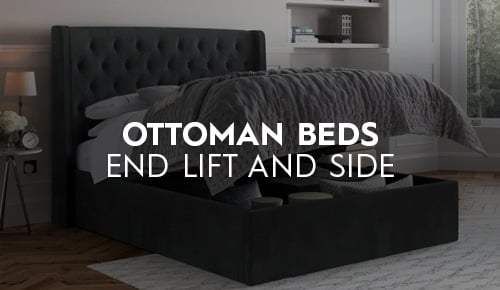
The Mira and Seraphine ottoman frames are the storage-led options, both available in double, king and super king with colour choices that keep them bold but still usable in a normal home. Seraphine pushes further into the curated boutique look, and lead times on Seraphine can be longer than on Mira - typical for more design-forward upholstery ranges. Worth planning delivery timing around the model you choose.
The Celeste is effectively a divan base and headboard combination, offered in double, king and super king. It brings pattern into play including stripe and floral options, with a choice between a standard base or a more tailored skirt finish. For buyers who want their bedroom to feel more put together and less minimalist, Celeste is the style direction that delivers it.
How the Range Compares
Against Hypnos at similar price tiers, Sophie Conran trades Royal Warrant heritage for design-led identity and menopause-specific temperature regulation. Both brands use high-quality natural fibre construction with proper pocket springs, and the choice between them often comes down to which proposition matters more to the buyer.
Against Harrison Spinks (including the Flaxby range also sold through Dreams), Sophie Conran offers a more curated, design-focused range with fewer models and a clearer identity. Harrison Spinks has the vertically integrated supply chain advantage and longer lifespan potential, while Sophie Conran has the style-led coherence and the temperature regulation focus.
Against the mainstream D2C hybrids (Simba, Emma, Nectar), Sophie Conran isn't really competing in the same category. The price tier is different, the construction approach is different (natural fibre rather than foam comfort layers), and the target buyer is different. For anyone crossing off D2C foam hybrids in their research, Sophie Conran represents a different category entirely.
Who the Range Actually Suits
Hot sleepers and menopausal sleepers who specifically need temperature regulation. This is the primary target audience and the range delivers on that proposition more effectively than most rivals in the UK mattress market.
Design-conscious buyers who want coordinated bedroom aesthetics and are shopping through the Dreams ecosystem. The mattress and bed frame ranges are designed to work together, and the overall aesthetic is considerably stronger than most own-brand ranges at any UK bed retailer.
Back sleepers and side sleepers of average weight who want premium natural fibre construction with modern comfort layer additions. The Aura's micro-spring system and the Sanctuary's alpaca-bamboo-wool-latex combination deliver proper pressure relief alongside the temperature benefits.
Who It Doesn't Suit
Buyers on tighter budgets. The Sophie Conran range starts above £1,000 and climbs to £2,000+, which puts it out of reach for anyone shopping at D2C mid-market prices. For cheaper natural fibre options, the M&S 2500 Luxury British Wool or the Flaxby range (also at Dreams) make more sense.
Anyone who specifically wants foam contouring. The collection uses natural fibre and latex comfort layers rather than memory foam, and the feel is traditional pocket spring with natural cushioning rather than modern foam body-hug. If you've tried Tempur or the D2C foam hybrids and that's the feel you want, Sophie Conran is the wrong category.
Buyers who want the longest possible home trial. Sophie Conran is sold through Dreams and trial terms follow the Dreams retailer policy rather than matching the 100-365 night trials the D2C brands offer. For buyers who need extended decision time, the D2C alternatives serve better.
The Verdict on Sophie Conran
The Sophie Conran x Dreams collection is one of the more interesting premium mattress launches in the UK market, and the design-led approach combined with the temperature regulation focus gives the range a clearer identity than most heritage brands deliver. The construction quality on the Aura, Solace and Sanctuary sits at the premium end, the British wool sourcing and Oldbury manufacturing give it real credentials, and the menopause-focused positioning addresses a category the industry has been slow to serve properly.
For the right buyer (temperature-sensitive, design-conscious, shopping at the premium end of the Dreams ecosystem), the range is worth taking seriously. For buyers who don't fit that profile, heritage pocket spring brands like Hypnos or the Flaxby range also at Dreams offer comparable quality at similar or slightly different price points. The decision comes down to whether the design-led identity and the temperature regulation focus justify the premium over the heritage alternatives, and for many buyers the answer will be yes.