Emma Sleep started life in Frankfurt in 2015 and rolled into the UK a couple of years later as a direct to consumer challenger to the established British bed brands. The company built its name on a single foam mattress, the Emma Original, and a marketing budget big enough to put it on television screens through most of the late 2010s. It has since broadened into hybrids, premium tiers, pillows, duvets and bed frames, but the bulk of its UK sales still come from the core mattress range.
The brand has won Which? Best Buy status more than once on the Original, which is the kind of recognition that tends to stick in a reader's mind when they start shopping. Our experience with the range broadly agrees.
Emma's Range Today
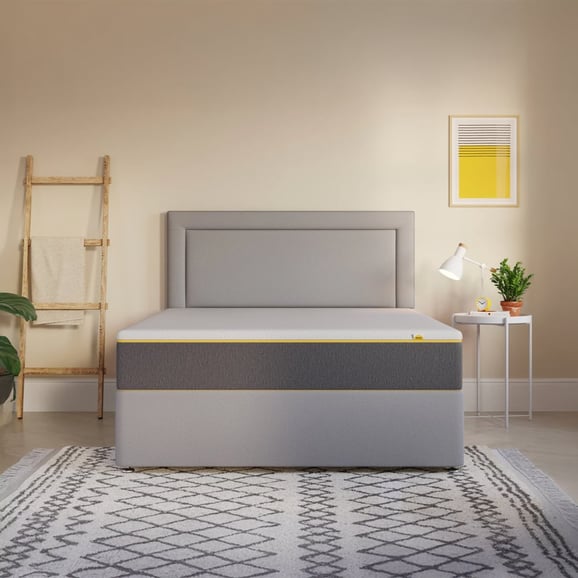
We've looked at several Emma models over the years and the range has broadened considerably from the single foam mattress that launched the brand. The Emma Original is the all-foam flagship - Airgocell open-cell foam on top, slower memory foam beneath, firmer base underneath. The feel lands around medium firm, softer at the shoulder than the hip, which is how the zoned support works in practice.
The Emma Hybrid adds pocket springs beneath the foam, and it changes the feel in ways that matter. More bounce, better edge support, more airflow. For couples and hot sleepers, the Hybrid is the version I'd look at over the Original. The Premium and Diamond Hybrid push the spec further with additional springs and more responsive surfaces. In the Diamond's case there's a graphite-infused layer for temperature, and in practice the premium tiers do feel more substantial under the body than the entry models.
On the Bed
Every Emma we've reviewed sits in the medium to medium-firm range, and the brand's firmness ratings are reasonably honest about what you'll actually feel. The Original is best for back sleepers and lighter side sleepers. Heavier side sleepers often find the top layer too firm at the shoulder, and stomach sleepers tend to want more resistance under the hips than an all-foam build provides.
The Premium and Diamond solve most of those issues. Pocket springs mean the mattress responds faster when you move, which matters for combination sleepers. Edge support is better too - if you sit on the side of the bed to get dressed, the Premium holds where the Original sinks. It's the kind of practical difference that doesn't show up in marketing but matters every morning.
On temperature, Emma has improved over the years. Early Original units had a reputation for sleeping warm, and the newer models have addressed that with cooling layers. The current range isn't the coolest on the market but it's no longer the complaint it used to be, particularly on the Premium and above where the spring layer lets air move through.
The Honest View
Firmness runs softer than most sleepers expect. What Emma calls medium sits around a five or six out of ten in practice, and people who describe themselves as liking a firm mattress are almost always disappointed. The 200 night trial exists for exactly this reason - use enough of it to know whether the feel suits you before deciding.
The range rewards buying at a discount. Emma runs heavy promotional cycles and the list price is rarely what anyone actually pays. Discounts of 40 to 50 percent across peak sale periods are common, and there are usually stacking codes at checkout. Paying full price on an Emma is the single easiest mistake to avoid.
The one-size-fits-all positioning has limits that the broader range now addresses. The Original was designed to suit everyone, which meant it suited most people reasonably but nobody perfectly. The Hybrid, Premium and Diamond exist because that promise was always a stretch. The range is broad enough now to cover most needs, but picking the right model for how you sleep matters more than just picking the brand.
Customer service has been reliable on the returns we've followed. Collection arranged by Emma at no cost, refunds in a reasonable timeframe. Emma went through a round of cost cutting in 2023, and on the recent cases we've tracked, service quality still looks sound.
Emma vs the Rest
In the UK mid-market, Emma competes most directly with Simba and Eve, with Otty close behind. On price comparisons it gets cross-shopped against Nectar and DreamCloud too. The brands at this level trade blows on different attributes. Emma has the marketing recognition and the Which? credibility. Simba has better temperature regulation on the Hybrid Pro. Otty has stronger edge support and sits firmer. Nectar has the 365 night trial.
If brand recognition and the reassurance of a Which? Best Buy matters most to you, Emma is the safer pick. If firmness, cooling or trial length rank higher on your list, one of the others probably edges it on those specific things.