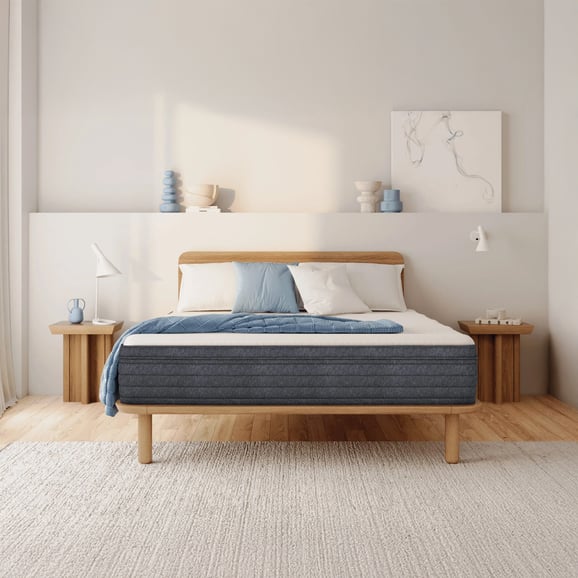
Bed-in-a-box mattresses arrive vacuum-packed and rolled into a box you can carry upstairs yourself, and that simple logistical advantage is the reason the format has taken over the UK mattress market. The compression process doesn't affect the mattress lifespan or performance - it's a delivery method, not a construction compromise. Once unboxed, the mattress expands to full size within 24 to 72 hours and performs identically to a mattress that was never compressed.
What's changed since the early days is that the format isn't just foam anymore. The original wave (Eve, Casper, early Emma) were all-foam builds, and to be honest the reputation bed-in-a-box picked up for sleeping hot and lacking edge support came from those early foam-only models. The current generation from Simba, Otty, Origin, Nectar and Emma have moved to hybrid construction - pocket springs plus foam comfort layers - and that shift addressed most of the early complaints.
How boxed delivery actually works
The mattress is compressed by industrial rollers that remove the air and reduce it to roughly a quarter of its expanded size. It's then rolled into a cylinder and sealed in plastic inside a cardboard box. When you open the box, cut the plastic carefully to avoid the cover, lay the mattress flat on your bed frame, and let it expand. Most hybrid boxed mattresses reach full shape within 24 to 48 hours, though some brands recommend waiting 72 before sleeping on it.
The off-gassing smell is real. New foam releases volatile organic compounds when first exposed to air, and the smell is strongest in the first few hours after unboxing. It's harmless and fades within a few days. Open a window and it clears faster. If you're sensitive to chemical smells, plan to sleep elsewhere on the first night.
One thing most people don't think about: you can't re-box it. Once the mattress is expanded, the vacuum seal is broken and it won't compress back. If you decide to return it during the trial period, the brand arranges collection of the full-size mattress, usually for free. Worth knowing before you assume it can go back in the box.
Foam-only vs hybrid boxed mattresses
The first generation of bed-in-a-box brands sold foam-only mattresses because foam compresses more easily than springs. The format worked for delivery but created real trade-offs: foam-only builds sleep warmer, have weaker edge support, and lose their shape faster than spring-based alternatives.
Hybrid boxed mattresses solved most of those problems. The pocket springs compress enough to fit in the box but provide structural support, airflow, and edge stability that foam alone can't match. Almost every major UK bed-in-a-box brand now leads with a hybrid as its flagship product. If you're buying a boxed mattress, hybrid is the default recommendation unless you specifically want the deep-sink foam feel and don't mind the trade-offs that come with it.
The brands worth looking at
Simba Hybrid Pro is the most widely recognised bed-in-a-box in the UK and the Simbatex foam comfort layer is more responsive than standard memory foam. 200 night trial, proper pocket spring base, and enough brand recognition that most buyers have heard of it before starting the research. I've tested Simba alongside most of the D2C field and it sits in the balanced middle of the firmness range.
Otty Original Hybrid runs firmer than most boxed rivals, which makes it the go-to for back sleepers and heavier buyers who find Simba or Emma too soft. 2,000 pocket springs on a king, Cool Blue Gel foam, 100 night trial. The Pure+ steps up to 4,000 springs for buyers over about 16 stone.
If you're not sure which firmness works for you, Nectar Premier Hybrid gives 365 nights to decide - the longest trial in the UK market. The memory foam comfort layer is softer than Simba or Otty, which suits side sleepers and lighter builds. A year-long trial removes the pressure of deciding quickly.
Origin Hybrid Pro has 5,700 pocket springs in the king size, the highest count in the D2C category. 15 year warranty, 200 night trial, graphite cooling layer. Less well-known than Simba or Emma but the spec sheet is stronger on paper and the cooling performance backs it up in practice.
Emma NextGen Premium is the softer end of the hybrid boxed market and suits lightweight side sleepers who find medium-firm too hard at the shoulder. 200 night trial, broad size range, and alongside Simba the strongest brand recognition in UK D2C.
Who bed-in-a-box suits
Buyers in flats, high-rises, or homes with tight hallways and staircases where a full-size traditional mattress physically can't get through. This is the original reason the format exists and it's still the strongest practical reason to choose it.
First-time mattress buyers who want long trial periods to decide. The D2C boxed brands offer 100 to 365 nights, which is substantially longer than showroom retailers typically provide. If you've never bought a mattress before and don't trust your own judgement from a 10-minute showroom lie-down, the trial period is the safety net.
Budget-conscious buyers. The logistics savings from boxed delivery are real, and most boxed hybrids deliver comparable construction to showroom mattresses at lower prices. You're trading the showroom experience for a lower price and a longer trial window.
Who might prefer traditional delivery
Buyers who want to try before buying. No amount of online research replicates lying on the mattress in a showroom, and if you live near a Dreams or Bensons and you're not sure what firmness you want, that showroom experience has real value.
Buyers who want heritage pocket spring with natural fibre fillings. Hypnos, Harrison Spinks, Relyon - these brands don't compress and box their mattresses, and the construction (hand-tufted, natural wool and cotton, high spring counts) is different from what the D2C hybrids offer.
Verdict
Hybrid bed-in-a-box is the default recommendation for most UK mattress buyers who don't specifically need the showroom experience or heritage construction. Simba for the balanced middle, Otty for firmer builds, Nectar for the longest trial, Origin for the highest spring count, Emma for the softest option. The format has moved well past its early foam-only limitations.