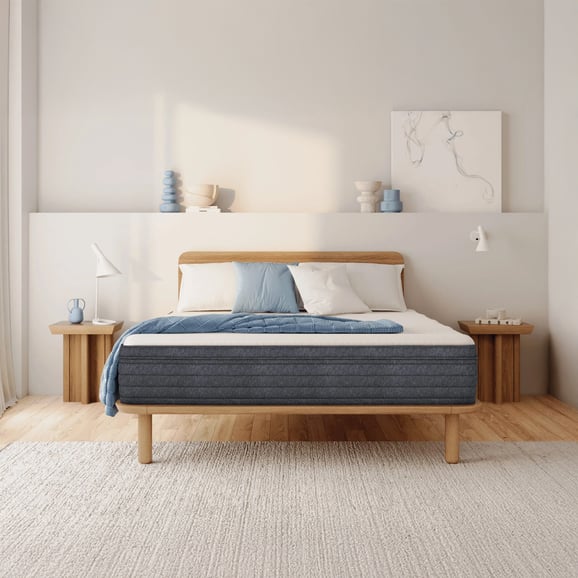
Choosing a mattress for an elderly sleeper involves concerns that younger buyers rarely think about. Getting in and out of bed safely, maintaining support during longer periods spent lying down, managing joint pain that worsens with age, and finding a mattress that can be maintained without needing to rotate a 40 kg mattress alone. The right mattress at this stage isn't about luxury. It's about practical comfort, safety, and maintaining independence for as long as possible.
I've reviewed mattresses for elderly buyers across a range of mobility levels, from active retirees to buyers with significant limitations. The construction that works best is consistent: medium-firm pocket springs with a responsive comfort layer, proper edge support for safe sit-to-stand, and a weight that makes rotation manageable without help.
Why edge support and bed height matter most
For elderly sleepers, the mattress edge is a safety feature. Every morning starts with sitting on the side of the bed and standing up. If the mattress edge collapses under sitting weight, balance is compromised at the most vulnerable moment. Highgrove models with AdvantEdge reinforcement and heritage pocket spring builds with rod-edge borders handle this best. I've sat on the edge of AdvantEdge mattresses in showrooms and the stability difference is obvious compared to standard construction.
Bed height connects directly to fall risk. Sitting on the edge with feet flat on the floor and knees at hip height is the safe standard. Too low means pushing harder to stand. Too high means a longer drop if balance goes. Check the combined height of frame and mattress before ordering, and adjust the frame height if the total is wrong for your mobility.
For elderly buyers with significant mobility limitations, an adjustable bed base can make the difference between independent living and needing daily assistance to get in and out of bed. The head elevation also helps with acid reflux and breathing difficulties that become more common with age.
Pressure management for longer periods in bed
Elderly sleepers typically spend more total hours in bed than younger adults, whether sleeping or resting. That means the comfort layer works harder and the pressure at sustained contact points (hip, shoulder, sacrum) builds for longer. A comfort layer that's adequate for a 7-hour sleeper can fail a 10-hour user because the foam compresses further under extended loading.
Responsive comfort layers that spring back when you shift position handle this better than dense memory foam that slowly compresses deeper through the night. Latex is the standout material - it doesn't develop body dips the way memory foam does, and it pushes back consistently regardless of how long you've been lying in one spot. For buyers concerned about osteoporosis or pressure sore risk specifically, those dedicated listing pages go into more detail on the medical considerations.
Joint pain and the firmness question
Many elderly buyers have some degree of joint stiffness or arthritis. The instinct is to buy soft for comfort, but too soft lets joints settle into positions that cause morning stiffness. Medium-firm with a responsive comfort layer is the better compromise - firm enough to hold the joints neutral, soft enough at the surface to cushion the contact points without creating new pressure problems.
For arthritis-specific guidance the dedicated page covers the condition in depth. The summary for elderly arthritis buyers: pocket spring hybrid, medium-firm base, responsive latex or foam comfort layer, and avoid dense memory foam that resists position changes when stiff joints need to move.
Brands I'd recommend for elderly buyers
Hypnos is the brand I'd suggest first for elderly buyers who can afford the premium. The Orthos Support range provides consistent edge-to-edge pocket spring support with natural wool comfort layers, and the hand-stitched construction maintains its support profile over years. Heritage build quality matters more for elderly buyers than for any other demographic because the mattress needs to perform under extended daily use without developing weak spots.
For mid-market pricing with proper edge support, Highgrove with AdvantEdge delivers a reinforced foam perimeter that holds firm when sitting on the side. The Natural Comfort range adds wool and silk for breathability and the warmth retention that matters for elderly sleepers who feel cold.
Simba Hybrid Pro is the D2C option for elderly buyers comfortable ordering online. The Simbatex foam is more responsive than memory foam, making position changes easier for stiff joints. 200 night trial gives proper testing time without showroom pressure.
For maximum spring count and precise contouring around joint pressure points, Origin Hybrid Pro delivers 5,700 pocket springs in a king with a 15 year warranty. Each spring responds independently, so the support adapts to the specific areas under load.
Elderly side sleepers who find medium-firm too hard at the hip should try Emma NextGen Premium. The softer foam comfort layer contours more gently around bony prominences where age has reduced the natural padding. Not right for every elderly buyer, but for lighter builds with sensitive joints it handles the contact pressure well.
Practical considerations
Mattress weight determines whether you can maintain it alone. A heavy turnable pocket spring mattress needs two people to flip. If you live alone, choose a one-sided no-turn mattress that only needs head-to-toe rotation, which is manageable solo for most people with reasonable mobility.
Temperature is worth considering from the other direction than usual. Many elderly sleepers feel cold rather than hot. Natural wool and cotton comfort layers retain warmth better than foam alternatives that can feel cold to the touch at first contact. If warmth matters more than cooling, heritage natural fibre construction suits the requirement better than the foam hybrids that dominate the D2C market.
Verdict
Edge support for safe sit-to-stand, medium-firm pocket springs for joint support, responsive comfort layers for easier position changes, and a weight you can manage for rotation. Hypnos for heritage quality, Highgrove for edge support at mid-market pricing, Simba for the D2C route, Origin for maximum spring count, Emma for softer builds. Consider an adjustable base if mobility is declining. And if you're buying for an elderly relative, involve them in the decision - no mattress review site knows their joints and preferences better than they do.