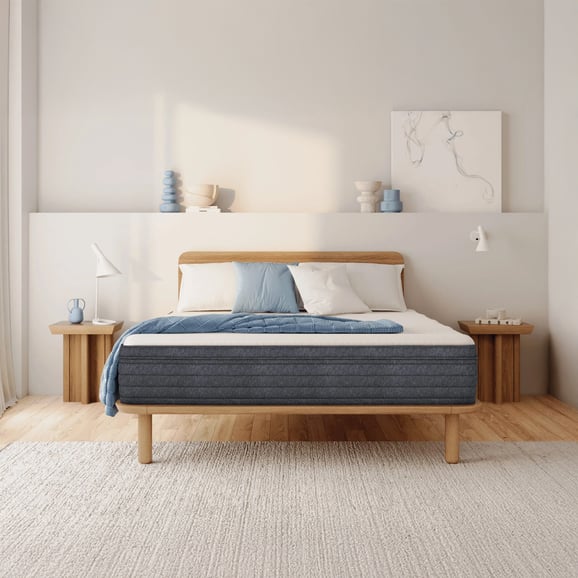
Highgrove Beds is a family-owned UK mattress and bed manufacturer based in Liversedge, West Yorkshire, producing around 5,000 beds a week from its own production facility. The company supplies independent bed specialists and larger retailers across the UK instead of selling direct to consumers, which means the brand sits slightly under the radar compared to the D2C names that dominate Google search results but is one of the more widely stocked mid-market options through traditional retail channels. If you like to try before you buy, Highgrove is one of the brands worth shortlisting, because many of the ranges are available on the shop floor where you can sense the difference between a firmer posture-led build and a plusher pressure-relieving feel.
When I've tried Highgrove models in-store, you can feel those differences pretty quickly just by pressing into the top and shifting position. The emphasis across the range isn't so much on finding you a signature feel, but rather a broad catalogue from which to choose. That said, the range can feel a bit overwhelming if you just want one clear best-buy option, so working out which of the main collections you're looking at before you start is the easier path.
How the Highgrove Range Is Structured
Across the range you'll find pocket sprung mattresses for more targeted support, hybrid builds blending springs with foam comfort layers, and natural-fibre styles designed to counteract that warm heavy feeling thicker foams sometimes have. Most models are built around pocket springs, which isolate movement better than older open coil designs and tend to work well for couples. On top of that spring base, Highgrove layers different comfort materials depending on the collection, including responsive foam, memory foam, latex and natural upholstery to fine-tune the overall feel.
The Aspen Memory Pocket 1500 is one of the most widely stocked models in the range and a good starting point for buyers who want a memory foam comfort layer over a pocket spring base at mid-market pricing. It pairs 1,500 pocket springs with a memory foam top, giving you pressure relief at the contact points with proper structural support underneath. For back sleepers and side sleepers of average weight, the Aspen is the default starting point within the range.
The Pillow Cloud Pocket 3000 Pillowtop steps up significantly with 3,000 pocket springs and a pillowtop comfort layer that delivers a plusher feel than the standard Aspen. This is where the range starts to compete with higher-tier mid-market alternatives, and the pillowtop construction suits buyers who want the cushioned upper layer without committing to memory foam's slow contouring. The extra spring count also helps with motion isolation for couples.
The Natural Comfort range is the natural-fibre option, pairing pocket spring support with luxury surface upholstery in wool, silk and cashmere. Designed to be comfortable year-round, cosier in winter and cooler in summer, and aimed at buyers who prefer traditional fillings to modern foam. Important to note that these natural-fibre builds can feel a touch firmer at first than foam-topped alternatives, especially if you're a lighter side sleeper.
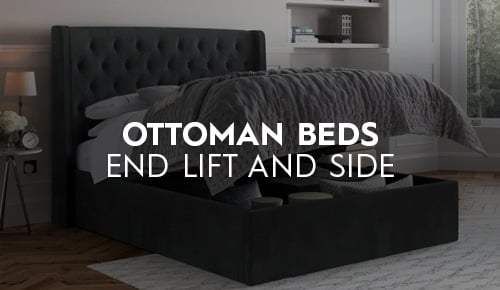
The range also extends into bed frames, with the Bourne Ottoman being one of the more widely searched models. For buyers doing a full bedroom refresh, the Highgrove frames coordinate with the mattress range and deliver the same consistent mid-market construction quality at practical prices.
AdvantEdge and Why Edge Support Matters
If you often feel like you're being pushed towards the edge of the mattress, it's worth looking out for the AdvantEdge system which Highgrove uses in some models. It features a high-density foam encapsulation that supports the mattress right to the edge, reducing roll-off and edge breakdown, and in turn making the usable sleep surface feel more generous. When I've sat on the edge of an AdvantEdge model in a showroom, it held up better than a lot of standard pocket sprung builds. You do pay a bit extra for those upgraded borders, but for buyers who sit on the edge of the bed getting dressed or who share a bed and end up near the edges through the night, the upgrade is often worth it.
Not every Highgrove model uses AdvantEdge, so checking the spec sheet before committing is sensible. The cheaper end of the range uses standard pocket spring construction without the reinforced border, and the edge support on those models is average rather than exceptional.
Zonagel and the Cooling Question
For shoppers who sleep hot, or who prefer a more responsive feel than traditional memory foam delivers, Highgrove's Zonagel models deserve attention. Zonagel is marketed as a non-temperature-sensitive comfort layer that reacts immediately to body pressure, with an open-cell structure designed to disperse moisture and improve breathability. In simple terms, it's aimed at people who want pressure relief without the slow, heat-led sink that some memory foam users dislike.
From my own quick testing, Zonagel feels springier and less "huggy" than classic memory foam. If you like that deep moulded-in feel, it might come across as a bit too bouncy. If you've tried memory foam and found it too warm or too slow to respond when you move, Zonagel is closer to what you probably want. It's one of the more interesting comfort layer options at this price tier, and it's the reason some Highgrove models end up on shortlists ahead of cheaper foam alternatives.
Natural Comfort and Traditional Fillings
The Natural Comfort range pairs a pocket spring system with luxury surface upholstery in wool, silk and cashmere, and is designed to be comfortable all year round - cosier in the winter and cooler in the summer. For buyers who want heritage-brand natural fibre construction without heritage-brand prices, Natural Comfort is where the Highgrove range delivers most value relative to the premium alternatives.
The trade-off with natural fibre construction is that the initial feel tends to be firmer than foam-topped alternatives, and lighter side sleepers can find the comfort layer too firm at the shoulder until the fibres break in and settle. Give any Natural Comfort model at least two weeks before forming a settled view. The feel at night one is rarely the feel at week three, and the settling process is particularly noticeable on natural fibre builds.
How to Choose the Right Highgrove Mattress
Start with your sleep position and the feel you prefer. If you sleep on your side, you'll usually want some extra cushioning at the shoulder and hip to avoid pressure build-up, which often points you towards a medium feel or a model with softer comfort layers. The Aspen Memory Pocket 1500 and the Pillow Cloud Pocket 3000 Pillowtop are the two models I'd look at first for side sleepers.
If you mainly sleep on your back, a firmer steadier surface can feel better for posture and spinal alignment, particularly if you don't like sinking in too deeply. The Natural Comfort models in medium or firm tension work well for back sleepers who want traditional construction, and the AdvantEdge-equipped variants add edge support that matters if you get up and down a lot through the night.
Stomach sleepers should lean firmer. The Highgrove range has firm options across most collections, and stomach sleepers generally do best on the models that combine firm pocket springs with a thin comfort layer on top, not the pillowtop variants where the extra surface depth can cause hip drop.
Finally, check whether the model you're considering is a no-turn or two-sided design. Many modern mattresses are rotate-only, but a true two-sided build is a plus if you like the idea of spreading wear more evenly over time, and Highgrove does offer both approaches depending on the collection.
Distribution and Where to Buy
Highgrove doesn't sell direct to consumers in the way D2C brands do. The range is distributed through independent bed specialists, regional chain retailers, and online third-party retailers including some of the dedicated mattress comparison sites. For buyers in most parts of the UK, there's usually a local independent bed shop within a reasonable distance that stocks at least part of the Highgrove range, and the in-person testing advantage is one of the main reasons to pick Highgrove over a D2C rival you'd have to buy blind.
Pricing varies by retailer, and the same Highgrove model can appear at different prices across channels. Checking a few retailers before committing is worth the ten minutes because the differences can be noticeable on the higher-tier models.
Why Highgrove Is a Sensible Shortlist
If you're after a UK-made mattress range with plenty of choice, from breathable natural builds through to more modern hybrids with edge support and pressure relief features, Highgrove is a brand that's easy to shop. The family-owned business, the Yorkshire manufacturing base, the proprietary comfort technologies like AdvantEdge and Zonagel, and the distribution through independent retailers all add up to a brand that delivers more than its relatively quiet marketing profile suggests.
The main trick is narrowing down which model fits your needs. Decide whether you want breathable and buoyant or more contouring and pressure-relieving, pick the firmness that matches how you sleep most nights, and use the in-store testing advantage instead of buying blind. For most buyers who shortlist Highgrove properly, the range delivers good value and reliable construction quality at mid-market prices.