Hybrid has become the default recommendation for most UK buyers, and there's a reason for that. Every brand that started out selling pure memory foam has added a hybrid version. Some have quietly retired the foam-only models entirely. That shift happened because the pocket spring core fixes most of the things people complained about with all-foam mattresses, without losing the pressure relief that made memory foam popular in the first place.
We've tested mattresses from every major UK brand over the last few years and hybrid is the category we recommend most often. Not because it's trendy. Because it works for more people than any other construction type.
What a Hybrid Actually Is
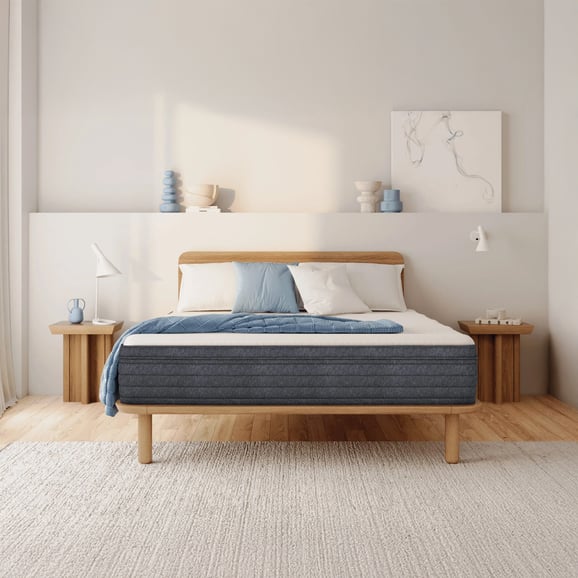
A hybrid is a pocket spring mattress with a comfort layer on top. That's it. The comfort layer can be memory foam, latex, reflex foam, natural fillings like wool or cotton, or some combination of the above. What separates a hybrid from a traditional pocket spring is usually the depth of that comfort layer and the type of foam used in it.
The term got abused a few years ago by brands calling anything with two layers a hybrid. You'd see open coil mattresses with a thin foam topper marketed as hybrids, which isn't really what most buyers mean when they hear the word. Worth being clear about that. A proper hybrid has individually wrapped pocket springs (not connected open coils) and a substantial comfort layer above them, usually 5 cm or more.
What You Get From the Spring Core Underneath
Airflow is the biggest one. The gaps between pocket springs let heat move through the mattress instead of sitting where your body warmth builds it up. Every hybrid I've slept on runs cooler than the equivalent foam-only model from the same brand, and we're talking about a clear difference across a warm night rather than something you have to squint to notice. Foam holds heat. Spring channels don't. Simple as.
Edge support comes next. A pocket spring base holds its shape all the way to the sides, which matters if you sit on the edge of the bed to put your socks on or if you're a starfish sleeper who ends up near the edge anyway. That was actually the first thing I noticed switching from foam to hybrid - sitting to lace trainers in the morning without the edge collapsing underneath me. All-foam mattresses sag at the perimeter more than the middle because the foam nearer the side has nothing holding it up.
Motion isolation is better than you'd expect. Individual pocket springs react independently, so when your partner rolls over at 3am the movement stays on their side instead of travelling across the whole mattress. Memory foam is still the king of motion isolation on paper, but the difference on a good hybrid is marginal, and you get all the other benefits.
Durability is the quiet one. Pocket springs last longer than foam. A foam-only mattress softens noticeably within five to seven years. A hybrid with a proper spring base keeps its structural support for a decade or more, because the part doing the heavy lifting is metal not compressed cells. The foam still wears, but the bed still supports you while it does. That difference adds up once you work out the cost per night over the life of the mattress.
The Comfort Layer Changes Everything
Two hybrids with identical spring counts can feel completely different depending on what's on top. Memory foam comfort layers give you that slow-contouring, pressure-relieving sink. Latex gives you a bouncier, more responsive surface. Reflex foam sits in the middle, with faster recovery than memory foam and a softer feel than latex. Natural fillings like wool or cotton breathe more and feel less synthetic against the skin.
Most mainstream UK hybrids use memory foam or a memory foam alternative. Simba's Simbatex, Emma's Airgocell, Origin's HexaGrid - these are open-cell foams designed to hold the pressure-relief benefits of memory foam without trapping as much heat. They work well for side sleepers and back sleepers of average weight.
Latex hybrids are rarer in the UK and usually more expensive. Dunlopillo does them best on the heritage side. If you've tried memory foam and found the slow sink uncomfortable, latex is worth looking at because it's responsive in a way foam can't quite match.
Natural fibre hybrids are a different category again. The Hypnos, Harrison Spinks and Vispring end of the market uses wool, cotton, cashmere and sometimes horsehair in the comfort layers instead of foam. More expensive, and the feel is entirely different. Worth saying these aren't really what most buyers mean when they use the word hybrid, though technically they qualify because the pocket spring base is there underneath.
Hybrid vs Memory Foam: Which Actually Suits You Better
If you're cross-shopping a hybrid against a pure memory foam mattress, the honest answer for most buyers is the hybrid. Here's why.
Pure foam wins on one thing - deep contouring. If you specifically want that enveloping, mould-to-your-body feel and you don't mind the heat trade-off, a foam-only mattress delivers it more directly. Ergoflex and Tempur are the two I'd point people towards if that's what you want. To be fair to pure foam, plenty of people sleep well on it for years without ever feeling the need to switch.
Hybrids win on nearly everything else. Cooler sleep, better edge support, faster response when you change position, longer durability, more flexibility for combination sleepers. And modern hybrids with deep memory foam comfort layers deliver most of the contouring benefits of pure foam anyway, without the downsides.
There's a price angle worth mentioning. Hybrids cost more to make because the pocket spring unit adds materials and labour. A brand's hybrid version is usually £100-200 more than its equivalent foam-only model. For what you get back in cooling, edge support and longevity, that's one of the best upgrades in the mattress market.
Who Should Buy a Hybrid
Couples benefit most. The combination of motion isolation from the foam layer and structural support from the spring base is what you want when two people with different sleep schedules share a bed. I've recommended hybrids to more couples than any other category, and the feedback has been consistent - one partner getting up doesn't wake the other.
Hot sleepers should also be looking at hybrid. The spring core provides the airflow that foam can't. Every cooling mattress we rate highly is a hybrid. If you've had a foam mattress that slept too warm, a hybrid is almost certainly the fix.
Combination sleepers (people who change position several times a night) do well on hybrids because the response time is faster than on memory foam. You don't get stuck in one position while the foam slowly catches up.
Heavier sleepers need the structural support pocket springs provide. All-foam builds compress more under higher body weights and lose their support faster. A hybrid with a decent spring count (2000+ on a king) handles weight properly and holds its shape over time.
Back sleepers and side sleepers of average weight are well served across most of the category. Stomach sleepers generally do fine too as long as the comfort layer isn't too soft, because the spring base holds the hips in a reasonable line.
Who Might Not Need One
People who specifically love the deep foam feel. If you've tried a Tempur in a showroom and that's the sensation you want, a hybrid won't replicate it. The spring response underneath breaks up the full-body contour that pure foam provides.
Buyers on a tight budget. A decent hybrid starts around £400 for a standard double. Below that you're into thin foam-topped open coils that aren't really hybrids in any practical sense. If £400 is out of reach, a good all-foam from Emma, Nectar or Ergoflex will serve you better than a cheap pseudo-hybrid. Mind you, the D2C brands do run heavy promotional cycles, so it's worth checking discounted pricing before writing off a proper hybrid on budget grounds alone.
People who already own and love a traditional pocket spring mattress with natural fillings. The Hypnos, Relyon and Harrison Spinks end of the market isn't really a hybrid in the modern sense, even though it technically has pocket springs and a comfort layer. The comfort layer there is natural fibre, not foam. Completely different feel. If that's the category you're in, stay there. Hybrids don't replace heritage pocket springs for the buyers who want that specific feel.
Are Hybrid Mattresses Worth It?
For the vast majority of UK buyers, yes, and by a clear margin. The hybrid category covers every price tier from budget to premium and delivers the best balance of cooling, support and pressure relief across all of them.
The question isn't really whether to buy a hybrid. It's which hybrid, at what price, and with which comfort layer type. That's what the rest of this guide is for.
One thing to factor in: trial length. Hybrids take a week or two to break in, and the feel settles once the foam comfort layer has properly unpacked. Don't judge one in the first few nights. That said, if it's actively uncomfortable from the first night, that's a different signal and worth acting on rather than hoping it settles. Every brand we recommend below has a trial period of at least 100 nights, most have 200, and Nectar pushes it to 365.
Brands We'd Pick for Hybrids
- Simba Hybrid Pro - the sweet spot of the Simba range. Aerocoil springs with Simbatex foam on top. Cooler than most foam rivals, better edge support than the entry Hybrid. 200 night trial. One of the most consistently recommended hybrids on the UK market.
- Origin Hybrid Pro - over 5,700 pocket springs in a king, HexaGrid comfort layer, graphite cooling built in. Less well known than Simba but the spec is stronger on paper. 200 night trial, 15 year warranty.
- Nectar Premier Hybrid - memory foam comfort layer over pocket springs, 365 night trial, lifetime warranty. If you want the longest possible window to decide, Nectar is the safest starting point.
- Emma Diamond Hybrid - graphite layer, zoned pocket springs, one of the cooler models in the Emma range. Premium tier. Worth buying at a discount, not at RRP.
- Otty Pure Hybrid 4000 - 4,000 pocket springs, firmer than most hybrids at this price. Good for heavier sleepers and anyone who finds Simba or Emma too soft. Strong edge support.
- Coolflex Hybrid Ice - value pick through MattressNextDay. Cooling performance well ahead of the price tier. Worth looking at if you want hybrid benefits on a tighter budget.
- Hyde and Sleep Hybrid Ice - the Dreams exclusive hybrid. Memory foam and micro pocket springs, tryable in any Dreams store. Removes the blind-buying risk most D2C hybrids come with.
- Eve Hybrid Duo - now under Bensons ownership, sits in the mid-tier with decent cooling and a reasonable price. Not as recognisable as it was at its peak but still a capable mattress.
- Dormeo Octaspring - a different approach to the category. The Octaspring foam has mechanical properties that mimic a spring, and some versions pair it with a pocket spring base for a proper hybrid. Worth a look if standard memory foam hybrids haven't worked for you.
What to Look For on the Spec Sheet
Four things actually matter. Everything else is marketing.
Spring count. King size: 2000 or more is standard for a proper hybrid, 3000+ is getting into premium territory, 5000+ is luxury. Lower than 2000 means the individual springs are larger, which affects how well the mattress contours.
Comfort layer depth. At least 5 cm. Less than that and the spring feel comes through too much, and the pressure relief isn't there. 7-10 cm is the sweet spot for most buyers. More than 10 cm starts to feel foam-heavy and loses some of the hybrid advantages.
Cover material. Bamboo, TENCEL or a cotton blend feel better against skin than polyester. Removable covers are a small bonus for long-term hygiene, though they don't affect the sleep experience directly.
Trial and warranty. 100 nights minimum, 200 ideal, 365 best. Warranty should be 10 years at minimum. Anything shorter on either is a flag that the brand isn't confident in the product holding up.
How We Test Hybrids
We don't review mattresses by reading the spec sheet. Every mattress on our shortlist gets slept on, and we test for the same things every time: how the comfort layer handles pressure at the shoulder and hip, how the edge holds when you sit or sleep near it, how the spring base manages airflow over a warm week, how the feel changes between night one and week three.
A cheap hybrid with good specs on paper that falls apart after a month gets removed from the list. A brand that honours its trial and collects returns without friction gets recommended more often than the spec sheet alone would justify. The practical experience of owning the mattress matters as much as the construction.