Back pain is the single most common reason people start looking for a new mattress, and the advice they find online is often oversimplified. "Buy firm" is the most repeated recommendation and it's wrong for about half the people who follow it. Whether a firmer mattress helps or hurts depends on where the pain is, what position you sleep in, and how much you weigh. Get it right and the mattress can reduce morning pain substantially. Get it wrong and you've spent money on a surface that makes things worse.
I've tested mattresses specifically for back pain performance across upper back, lower back, and full-spine presentations, and the pattern is clear: there's no single firmness that works for everyone. What works is matching firmness to your sleep position and body weight, then letting the mattress do the alignment work while you sleep.
This page is not medical advice. Back pain has many causes, and a mattress change addresses only the mechanical support component. If your pain is severe, worsening, or accompanied by numbness, tingling, or weakness in the legs, see your GP before changing your sleep setup. A 2021 systematic review published in BMC Musculoskeletal Disorders confirmed that medium-firm mattresses provide the best outcomes for most lower back pain sufferers, but individual assessment matters.
The morning pain diagnostic
If your back pain is worst in the morning and eases as you move through the day, the mattress is almost certainly contributing. That pattern means the spine is being held in a poor position for 7-8 hours and your muscles are compensating once you're upright. A mattress change is likely to help.
If your back pain is worst at the end of the day and better after sleep, the mattress probably isn't the cause. The pain is activity-related, and spending money on a new mattress won't address it.
If the pain is constant regardless of time of day, the cause is likely more complex than the mattress alone. Medical investigation should come before mattress shopping.
Upper back vs lower back pain
Lower back pain is the more common complaint and usually responds best to medium-firm support. The lumbar spine needs to maintain its natural curve while you sleep, and a mattress that's too soft lets the pelvis drop, pulling the lower spine out of alignment. A mattress that's too firm creates pressure at the sacrum and hips without letting the body settle into the surface properly.
Upper back and shoulder blade pain (thoracic region) needs a different approach. The contact area is at the shoulder blades and upper spine, and firmness at this point creates the same kind of pressure problem that kyphosis sufferers experience. Softer comfort layers at the shoulder zone help upper back pain more than increased firmness does.
Full-spine pain where both upper and lower back are affected is the hardest to address with a single firmness. Zoned support (softer at the shoulders, firmer at the lumbar and hip) is the construction most likely to help, because it accommodates both areas without compromising either. I've tested zoned hybrids against uniform-firmness builds for full-spine alignment and the zoned construction wins for this specific presentation.
Sleep position and firmness for back pain
Back sleepers: medium-firm is the standard recommendation. The mattress holds the lumbar curve in neutral without letting the pelvis sink. If you're under 10 stone, medium may be enough because lighter body weight creates less pelvic drop. Over 15 stone, step up to firm to prevent the pelvis sinking past the support threshold.
Side sleepers with back pain: medium to medium-soft. The shoulder and hip need to sink in enough to keep the spine straight from a lateral perspective. Too firm at the shoulder pushes the spine into an S-curve that creates or worsens lower back pain. I test this by looking at whether the spine stays level from shoulder to hip - if it doesn't, the mattress is too firm for that body weight in that position.
Stomach sleepers: medium-firm to firm. Stomach sleeping arches the lower back forward, and only a firm base prevents the pelvis from dropping further. Stomach sleeping with back pain is the hardest combination to address with a mattress because the position itself stresses the lumbar spine. If you can train yourself to sleep on your side or back, that's more effective than any mattress change.
Brands I'd recommend for back pain
For back sleepers with lower back pain, Otty Original Hybrid sits at medium-firm with 2,000 pocket springs and delivers the kind of consistent lumbar support that prevents morning stiffness. I've tested the Otty specifically for lower-back hold and the pelvis stays level through the night without creating new pressure at the hips. 100 night trial.
Side sleepers with back pain need the softer middle ground. Simba Hybrid Pro uses zoned pocket springs with a softer shoulder area, and the Simbatex foam responds faster than memory foam when you shift position. I've tracked both side-sleeping spine alignment across several hybrids and the Simba holds the spine straighter than firmer alternatives that push the shoulder out of line. 200 night trial.
Origin Hybrid Pro delivers 5,700 pocket springs on a king, and for back pain the spring density means more precise adaptation to the specific lumbar curve your spine presents. The graphite cooling layer is a bonus for buyers who also run warm. 200 night trial, 15 year warranty.
Heritage buyers who want natural fibre comfort should look at Hypnos Orthos Support. Firm pocket spring base with wool comfort layers that maintain their support profile over years without developing the dips foam alternatives create under sustained nightly loading. That consistency matters for back pain where the mattress needs to hold the same alignment every night without degrading.
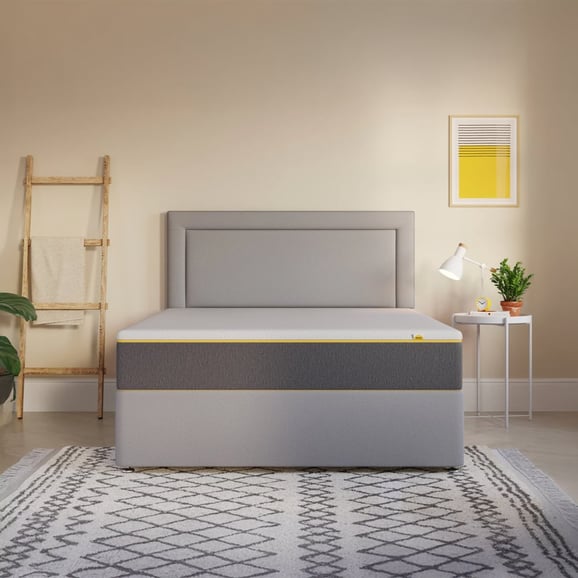
For lighter back pain sufferers or side sleepers who find medium-firm too hard at the shoulder, Emma NextGen Premium provides softer contouring at the contact points. The trade-off is less structural firmness at the lumbar, so it suits upper-back-pain and mild lower-back-pain presentations better than severe lumbar cases.
Common mistakes
Buying extra-firm because someone said firm is better for your back. The 2021 BMC Musculoskeletal Disorders systematic review found medium-firm delivered better outcomes than either soft or very firm. Extra-firm creates new pressure problems at the hip and shoulder that offset any lumbar benefit.
Ignoring the mattress age. Most mattresses lose support between years 7 and 10. A mattress that worked five years ago may now be contributing to the problem because the comfort layer has compressed and the springs have softened in the areas you load most heavily.
Buying without considering sleep position. A firm mattress suits back and stomach sleepers. A medium mattress suits side sleepers. Buying firm when you sleep on your side creates shoulder pain that can present as upper back pain. The position matters as much as the condition.
Verdict
Match firmness to sleep position and body weight. Back sleepers: medium-firm. Side sleepers: medium. Stomach sleepers: firm. Adjust down one notch if you're under 10 stone, up one notch over 15. Otty for firm back-sleeper support, Simba for balanced side-sleeper alignment, Origin for maximum spring precision, Hypnos for heritage consistency, Emma for softer builds. If your pain is worst in the morning, the mattress is probably part of the problem. If it's worst in the evening, see your GP first.